
The ‘Good practice manual for the management of brown bear corridors in the Cantabrian mountain range’ is published
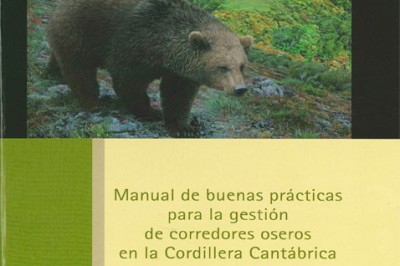
The Cantabrian brown bear population is currently divided into two subpopulations separated geographically by an area about 50 km wide, through which run major transport networks (a highway, roads and a railway line) and where there are large deforested areas. A key to the conservation of the species therefore lies in ensuring communication between reproductive […]
Solutions to reduce accidents caused by wildlife
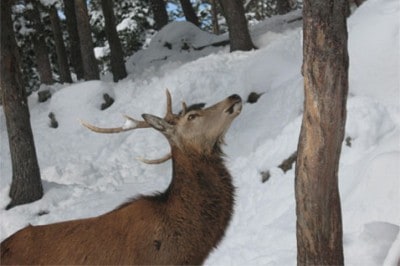
Minuartia has signed a cooperation agreement with RIVISA to develop perimeter fences that can reduce wildlife conflicts on roads and railways and in other areas. The increase in the number of traffic accidents caused by wild boar, roe deer and other animals has a high social and economic cost. The construction of wildlife passages combined […]
The Wildlife and Traffic Manual of the COST 341 Project is adapted for Israel
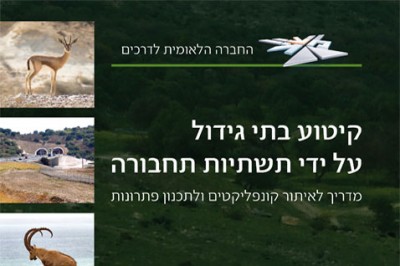
The Israel National Road Company has published a Hebrew version of the document Habitat fragmentation due to transportation infrastructure: a handbook for identifying conflicts and designing solutions. The first edition of the manual, which is co-authored by Dr. Carme Rosell of Minuartia, was published in 2003 as part of the European COST 341 project on […]
Soluciones para reducir accidentes causados por fauna
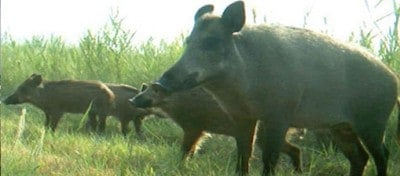
Minuartia ha suscrito un acuerdo de cooperación con Rivisa para desarrollar valladoss perimetrales que reduzcan los conflictos causados por fauna en carreteras, ferrocarriles y en otros espacios. El aumento de los accidentes causados por jabalíes, corzos y otros animales en infraestructuras de transporte están generando importantes costes económicos y sociales. La construcción de pasos de […]
The Italian journal Gazzetta Ambiente publishes a paper on reducing road accidents caused by wildlife
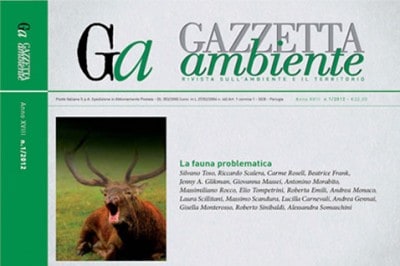
The expansion of the road network, along with the increase in populations of large mammals such as wild boar, has led to a rise in the number of road accidents. This human-wildlife conflict has considerable economic and social costs. In an issue dedicated to wildlife conflicts, the Italian journal Gazzetta Ambiente has published a paper […]
Richard Forman presents a safe and more sustainable vision of road transport

On 3 May, Richard Forman from Harvard University, author of important works such as “Landscape Ecology” and “Road Ecology”, gave a presentation on hisrecent work in the field of ecology and planning of urban areas. The presentation took place at the Ministry of Agriculture, Food and Environment in Madrid as part of a meeting of the Working Group on Habitat Fragmentation Caused by Transport Infrastructure. Minuartia providestechnical support for this working group. In this lecture, Dr. Forman presented his vision for a new, safer transport system that would significantly reduce the impacts of roads on the environment (accidents, pollution, noise, habitat fragmentation, etc.). Thisfuturistic vision of a road network was described in a recent paper […]
Wildlife management at airports brings together international experts in Norway
The 30th conference of the International Bird Strike Committee has been held in Stavanger (Norway). The main aim of this organisation is to improve air safety and reduce wildlife conflicts at airports. The management of habitats in airports and cooperation with external agents are key factors for reducing bird strikes and the severity of accidents. […]
The definition of indicators to measure the contribution of eco-efficiency to the competitiveness of companies in the Basque Country
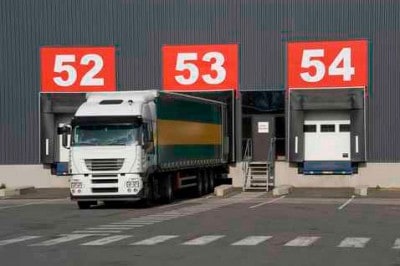
The public company Ihobe supports the Basque Government’s Department of the Environment, Planning, Agriculture and Fisheries. To move towards a green economy, Ihobe has launched a project to define and calculate a series of indicators of economic, social and environmental competitiveness, in order to quantify the contribution of eco-efficiency to the competitiveness of Basque companies. […]
The recovery of the River Ter’s riparian habitats is presented in an exhibition at Bescanó
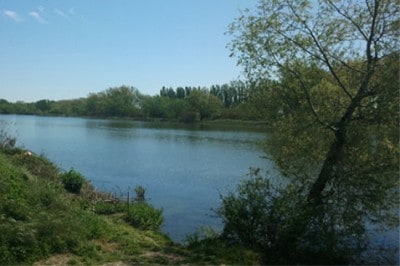
The Alba Ter Consortium is responsible for the LIFE+ project “Recovery of riparian habitats of the River Ter (Riparia-Ter)”, whose main objectives are the restoration and reforestation of degraded riparian forests, temporary recovery of wetlands, improvement and regeneration of riparian forests, control of invasive plants and the planning of accesses to prevent degradation of these […]
