
R&D&I
Research, Development and Innovation Projects
We develop research projects and generate innovative solutions for the conservation of biodiversity, ecological restoration and the resilience and sustainability of infrastructures and territories. Our priority research lines are: Infrastructure and Biodiversity; Wildlife Damage and Risk Management and Prevention; and Ecological Transition and Climate Change, although we also carry out projects in other areas.
We participate in national and international competitive projects together with universities, research and technology centers, and public administrations from across Europe, generating useful and transferable knowledge for planning and management. We prioritize knowledge with high levels of technological readiness (TRL), which enables the application of modeling and analysis tools in real-world settings to improve the impact and effectiveness of our services.
SHIFTIN – Towards Resilient, Sustainable, and Biodiversity-Friendly Transport Infrastructure
2026-2030
International research project SHIFTIN, is funded under the HORIZON-CL5-2026 programme, whose main objective is to accelerate the transition towards climate-neutral, resilient and biodiversity-friendly transport infrastructure by 2050. Major transport routes are essential for the development of societies and are increasingly exposed to floods, landslides, heatwaves and other risks associated with climate change. They also generate environmental impacts, CO₂ emissions and air pollutants, while fragmenting landscapes and ecosystems. Despite the measures adopted in Europe, uptake remains slow because the sector needs clear standards, comparable performance testing and public procurement specifications. SHIFTIN will demonstrate and combine low-carbon circular construction materials, nature-based solutions, advanced monitoring and decision-support systems to enable safer and more sustainable options. The project, coordinated by Fundación Tecnalia, brings together 21 organisations from 9 countries.
MINUARTIA leads two tasks focused on the design and implementation of nature-based solutions across four corridors of the European Transport Network (Atlantic, Mediterranean, Scandinavian-Baltic, and Adriatic-Baltic of the North Sea), covering road, rail and port infrastructure, as well as on the development of a landscape ecology model applied to transport networks (LETI) to assess the impact of different nature-based solutions on infrastructure resilience to climate change and biodiversity enhancement. MINUARTIA also contributes to the development of standards for decision-making and the implementation of new monitoring technologies.
Funding: European Commission – Programme Horizon Europe
Partners: Fundacion Tecnalia Research & Innovation (coord.); IDP Ingeniería y Arquitectura Iberia; École Nationale des Ponts et Chaussees; Eidgenoessische Technische Hochschule Zuerich; Minuartia Wildlife Research & Consultancy; Universidad de Vigo; Research Driven Solutions; Inframind Labs; University College London; Universidad de Cantabria; Grid Engineers Ike; Zavod Za Gradbenistvo Slovenije; Acciona Construccion; Bouygues Travaux Publics; Politecnico Di Milano; Centro de Estudios de Materiales y Control de Obra; Neo Eco Ukraine, Centro de Estudios y Experimentacion de Obras Publicas; Izpitek Solar, 2tdk Druzba Za Razvoj Projekta Doo; Druzba Za Avtoceste V Republiki Sloveniji; Autostrade per l’Italia; Forum des Laboratoires Nationaux Europeens de Recherche Routiere; Maple Consulting.
OCTOPUS - Open Collaborative Training in Operational Pathways for pan-Union Resilience of Transportation Systems
2026-2030
International project OCTOPUS, funded under the HORIZON-MSCA programme (Marie Skłodowska-Curie Actions), which supports the training, mobility and professional development of researchers from around the world through doctoral fellowships. The main objective of the project is to develop a set of doctoral theses that will generate technologies and frameworks to create transport systems that are resilient to climate change and contribute to positive outcomes for nature. The project aims to train doctoral researchers in Europe by integrating different areas of knowledge in transport infrastructure resilience research and adopting a holistic and integrated approach. OCTOPUS doctoral researchers will be trained to: better understand the risks that transport will face in the future; develop approaches to managing uncertainty; and implement innovative empirical solutions to build resilience in a flexible way while creating synergies with risk reduction and biodiversity conservation.
An international consortium bringing together 25 organisations from 10 countries will train new specialists through a high-quality, international, cross-sectoral and interdisciplinary programme, equipping them to transform the resilience paradigm in transport and address the highly uncertain future climate scenarios facing the sector.
MINUARTIA, together with the University of Barcelona, will host a researcher working on the research line focused on the synergies between transport infrastructure resilience and biodiversity.
Funding: European Commission – Programme Horizon Europe
Partners: Trinity College Dublin (coord.); Technological University of Eindhoven; Minuartia Wildlife Research & Consultancy, Universidad del País Vasco, Transport & Mobility Leuven, Opleidingscentrum voor Hout en Bouw vzw, University of Palermo, University College London, University of Cambridge, Dunarea de Jos University of Galati, University College Dublin, Austrian Institute of Technology.
Associated partners: Tecnalia Research & Innovation, Dublin Civil Defence, InfraPlan Konzalting Jdoo Za, Universidad de Barcelona, AECOM, RADANS, Viuda de Sainz, Slaska Polytechnic, Ove Arup & Partners Ireland, CitiEU Consultancy, Iterchimica, De Groote – Houtboerke NV, Urban Intelligence.
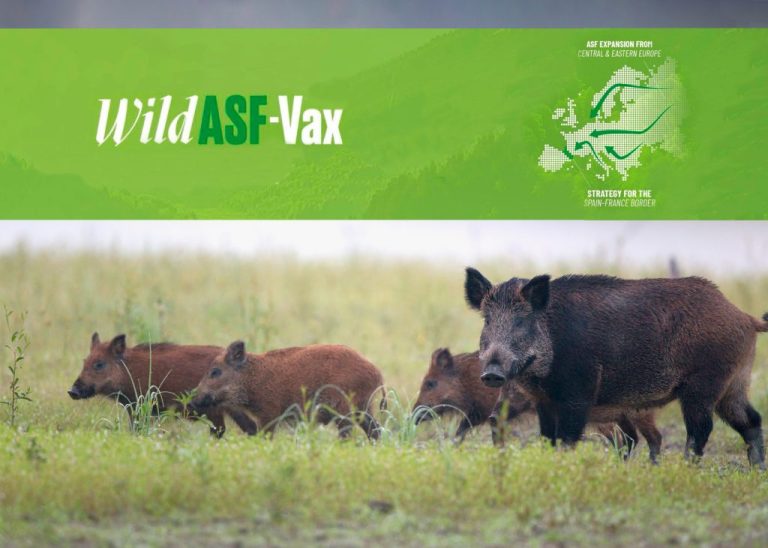
Transference of ASF Oral Vaccination in Wild Boar to Mitigate the Introduction in Free-Countries
2024-2027
National public-private collaboration research project (CPP2023-010878) whose main objective is to complete the research and transfer of an oral vaccine for African swine fever (ASF), which is being developed by UCM in collaboration with GSD. ASF is a highly contagious disease that affects both domestic pigs and wild boar, causing very high mortality rates and for which no vaccine is yet available. MINUARTIA is the coordinator of the project, developed jointly with VISAVET-Complutense University of Madrid and the company Gold Standards Diagnostics.
As project coordinator, MINUARTIA leads the work packages that include the modelling of optimal vaccination strategies (assessing connectivity and wild boar movement analysis) in different landscape contexts, the development of a sociological study on stakeholders in cross-border areas between Spain and France and their acceptance of the vaccine. In addition, it will develop a decision-support system for future ASF vaccination campaigns in wild boar (once the vaccine becomes available) and a practical guide to facilitate informed decision-making and its immediate application in the event of a health emergency.
Financing: Ministry of Science, Innovation and Universities / State Research Agency / Co-funded by the European Union.
Systemic Mobilisation for Joint Biodiversity and Infrastructure
2024-2027
European research project (HORIZON-JU-ER-2023-01) that brings together more than twenty organisations from 12 countries, with the main objective of accelerating the implementation of policies and tools to enhance biodiversity in railway infrastructures and power lines. The specific objectives are: to propose actions that improve the consideration of biodiversity in infrastructure policies and development; to develop practical tools that foster biodiversity integration in infrastructures while enabling data collection standardisation; and to engage key stakeholders responsible for infrastructure management and its integration with the surrounding environment.
MINUARTIA leads two tasks focused on modelling and on developing a guide for the application of Nature-Based Solutions aimed at improving the resilience of infrastructures to the effects of climate change, while at the same time delivering benefits for biodiversity. We also participate in the development of standards for biodiversity data collection, taking advantage of the opportunities offered by new technologies.
Funding: European comission – Programa Horizon Europe / Cofinancia Europe’s Rail
Website: https://symbiosis-transport.eu/
Partners: UIC-Union Internationale des Chemins de Fer, FEHRL – Forum of European National Highway Research Laboratories, Universidad Politecnica de Madrid, CERTH – Ethniko kentro erevnas kai technologikis anaptyxis, PGE Energetyka Kolejowa Spolka Akcyjna, MINUARTIA, ITALFERR, SLU-Sveriges Lantbruks Universitet, Fundación de los Ferrocarriles Españoles, Centralesupelec, Facultad de Ciencias – Associacao para a investigacao e desenvolvimento de ciencias, Societe Nationale SNCF, Konnekt able technologies limited, HZ Unternehmensberatung AG, RPS – Ochrana dracov na slovensku zdruzenie, IFEU – Institut fur Energie- und Umweltforschung.
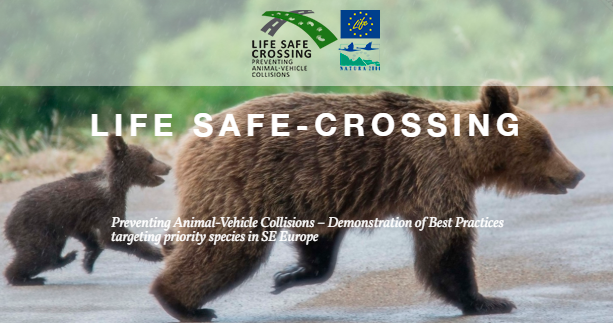
Preventing Animal-Vehicle Collisions. Demonstration of Best Practices targeting priority species in SE Europe
2018-2023
Participation in the European project LIFE SAFE-CROSSING (LIFE17NAT/IT/000464), aimed at implementing mitigation actions to reduce the impact of roads on large carnivores in southeastern Europe. The project is carried out in collaboration with 13 organisations from four European countries, in several Natura 2000 sites, and focuses on four priority species: the Iberian lynx in the Iberian Peninsula, the brown bear in Romania and Greece, the Apennine brown bear, and the wolf in Italy.
MINUARTIA provides advice and cross-cutting support to the project partners on aspects related to collision prevention. It analyses road sections with high collision rates, proposes measures to reduce them, explores wildlife detection technologies, and designs adaptations of wildlife crossings. Among the project’s actions, relevant examples include the application of innovative techniques to reduce animal–vehicle collisions, the monitoring and adaptation of underpasses for wildlife use, and the study of driver behaviour through neuromarketing methodologies.
Funding: European Commission – LIFE Programme.
Web del projecte: https://life.safe-crossing.eu/
Partners: AGRISTUDIO (coord), CALLISTO, Cosmote, Egnatia Odos, Fundatia Carpati, ICAS, Green Fund, Junta de Andalucía, MINUARTIA, Parco Nazionale d’Abruzzo, Parco Nationale della Majella, Provincia di terni.
Biodiversity and Infrastructure Synergies and Opportunities for European Transport Networks
2018-2023
Participation in the international project BISON, framed within the HORIZON 2020 Programme, whose aim is to identify future research and innovation needs to make infrastructures more sustainable for biodiversity while ensuring their reliability and efficiency. The project establishes a Strategic Research and Deployment Agenda (SRDA) to strengthen the knowledge base on infrastructures and biodiversity. A total of 39 organisations take part in the project, including government representatives, research institutes, companies, and associations.
MINUARTIA leads one of the five work packages, focused on the integration of biodiversity into the current and future management of transport infrastructures. Its objective is to identify and describe good practices and new technologies, including Nature-Based Solutions, applicable to enhancing biodiversity in transport infrastructures. The project also foresees the identification of emerging trends to be addressed in the current scenario of climate change and its effects on transport-related biodiversity. The project started in January 2021 and has a duration of 30 months.
Funding: European Comission – Programa Horizon 2020
Web del projecte: https://bison-transport.eu/
Partners: Forum of European National Highway Research Laboratories (FEHRL), Ministère de la Transition Ecologique et solidaire (MTES), Centre for Research and Technology Hellas – Hellenic Institute of Transport (CERTH/HIT), Centrum dopravniho vyzkumu, v.v.i. (CDV), Université Gustave Eiffel (UGE), Service Public de Wallonie Mobilité et Infrastructure (SPW), Union Professionnelle du Génie Ecologique (UPGE), International Union of Railways (UIC), Centre d’Études et d’expertises sur les Risques, l’Environnement, les Mobilités et l’Aménagement (CEREMA), Agristudio S.r.l , WWF Programul Dunare Carpati Romania, Univerzita Konštantína Filozofa v Nitre , Federal Ministry for Climate Action, Environment, Energy, Mobility, Innovation and Technology (BMK), HI International APS, Fondation française pour la recherche sur la biodiversité (FRB), Centre de Recherches Interdisciplinaires en Droit de l’Environnement de l’Aménagement et de l’Urbanisme Equipe thématique de l’Observatoire des Mutations Institutionnelles et Juridiques Université de Limoges (UNILIM), Office Français de la Biodiversite (OFB), Federal Highway Research Institute (BASt), Bundesministerium für Verkehr und digitale Infrastruktur Federal Ministry of Transport and Digital Infrastructure (BMVI), Asociatia ZARAND, University of Agricultural Sciences and Veterinary Medicine of Cluj-Napoca (USAMV – CN), Generalna Dyrekcja Drog Krajowych i Autostrad / General Directorate for National Roads and Motorways (GDDKIA), Slovenska Technicka Univerzita v Bratislave, SPECTRA Centre of Excellence of EU (STUBA), MINUARTIA Estudis Ambientals SL, Swedish University of Agricultural Sciences (SLU), Agency for Roads and Traffic (AWV), Kiel University, Christian-Albrechts-Universität zu Kiel (CAU), University of Kassel (UNIKASSEL), Bundesamt für Naturschutz (BfN), ARMSA, Infraestruturas de Portugal S.A., Ministry of Transport and Construction of the Slovak Republic (MoTC SR), The Federal Roads Office (FEDRO), Netivei Israel – National Transport Infrastructure Company Ltd. (NTIC), Nature Conservation Agency of the Czech Republic (NCA), Rijkswaterstaat – executive agency of Ministry of Infrastructure and Water Management, the Netherlands (RWS), Transport Infrastructure Ireland (TII), Egis Structures & Environnement (EGIS), The Swedish Transport Administration (TRV), Departament de Territori i Sostenibilitat. Generalitat de Catalunya (DTES.GENCAT), Anas SpA (ANAS)
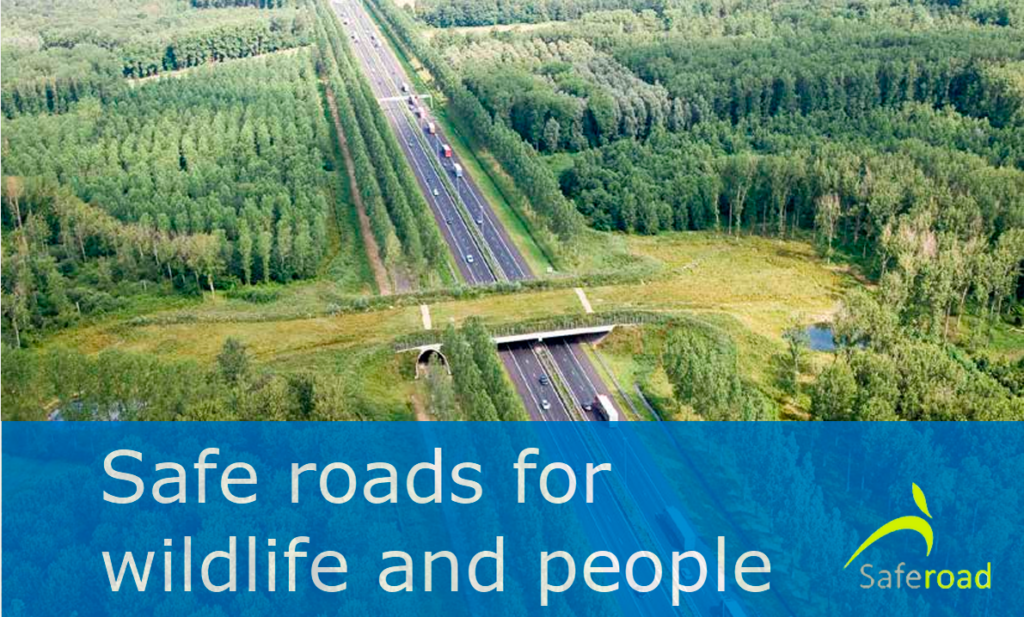
SAFEROAD - Safe Roads for Wildlife and People. Cost efficient mitigation strategies and maintenance practices
2014-2016
The project, led by ALTERRA – Wageningen, aims to identify the most effective road management strategies and conservation practices to reduce conflicts between transport infrastructure and wildlife.
The project is part of the Wildlife and Roads research programme promoted by CEDR. It integrates and enhances knowledge to reduce the impact of roads on biodiversity and to decrease traffic accidents caused by animals. It also facilitates the transfer of this knowledge through practical guidelines and other tools, making it accessible and applicable for both road and environmental authorities, as well as other stakeholders involved in road infrastructure and wildlife management.
MINUARTIA is part of the project coordination team, contributes to various tasks related to identifying factors associated with the creation of wildlife-vehicle collision hotspots involving ungulates, and leads the development of a guideline to be applied in road maintenance, with the aim of reducing conflicts with wildlife.
Funding: Conference of European Directors of Roads (CEDR)
Partners: ALTERRA, Wageningen University and Research Centre (coord); Swedish University of Agricultural Sciences (SLU); Minuartia Wildlife Research and Consultancy; Institute for Natural Resource Conservation; Norwegian Institute for Nature Research (NINA); Roughan & O’Donovan Innovative Solutions (RODIS), Calluna PRC.
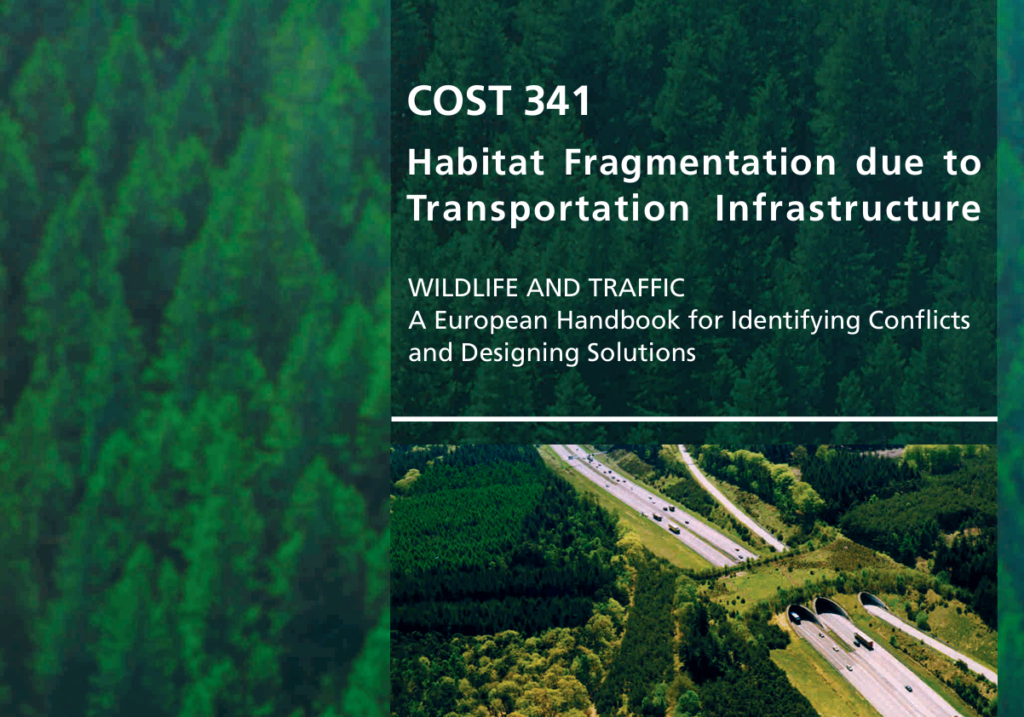
Action COST 341. Habitat Fragmentation due to Transportation Infrastructure
1998-2003
Scientific and technological cooperation project involving 16 European countries, which led to numerous initiatives in transport ecology at both European and national levels, particularly the implementation of impact mitigation measures such as the construction of wildlife crossings on roads and railways. The European network IENE (Infrastructure and Ecology Network Europe) was the main driving force behind the initiative.
The objective of the Action was to promote more sustainable transport infrastructure by reducing habitat fragmentation, wildlife mortality and wildlife–vehicle collisions. As part of its outcomes, several reference documents were published, including the European Review, which assessed the state of the art across Europe, and the “Wildlife and Traffic: A European Handbook for Identifying Conflicts and Designing Solutions”, published in 2003. The handbook provided technical guidance for developing measures to improve the permeability of transport infrastructure and preserve ecological connectivity across Europe. It was also translated into Spanish as “Fauna y Tráfico”.
In Spain, under the coordination of MITERD and within the framework of the Action, the Working Group on Habitat Fragmentation Caused by Linear Transport Infrastructure was established. The group remains active and has published numerous documents on the subject and led actions to mitigate this issue since 2003.
MINUARTIA participated in the project as technical assistance to MITERD and, in particular, contributed to the preparation of the Wildlife and Traffic handbook and coordinated the development of the document “COST 341. La fragmentación del hábitat en relación con las infraestructuras de transporte en España”, published in 2003 by the then Spanish Ministry of the Environment.
Funding: European Comission – COST project; Ministerio de Medio Ambiente.
Project website: www.miteco.gob.es/content/dam/miteco/es/biodiversidad/publicaciones/cost341-handbook_tcm30-195789.pdfhttps://bison-transport.eu/
Partners: Infrastructure and Ecology Network Europe (IENE); Dutch Ministry of Transport, Public Works and Water Management; Norwegian Public Roads Administration; Transport Research Center; Highways Agency UK; Ministerio de Medio Ambiente ES; Agency for Nature Conservation, Czeck Republic; Swish Ornithological Institute; City of Copenhaguen.
