
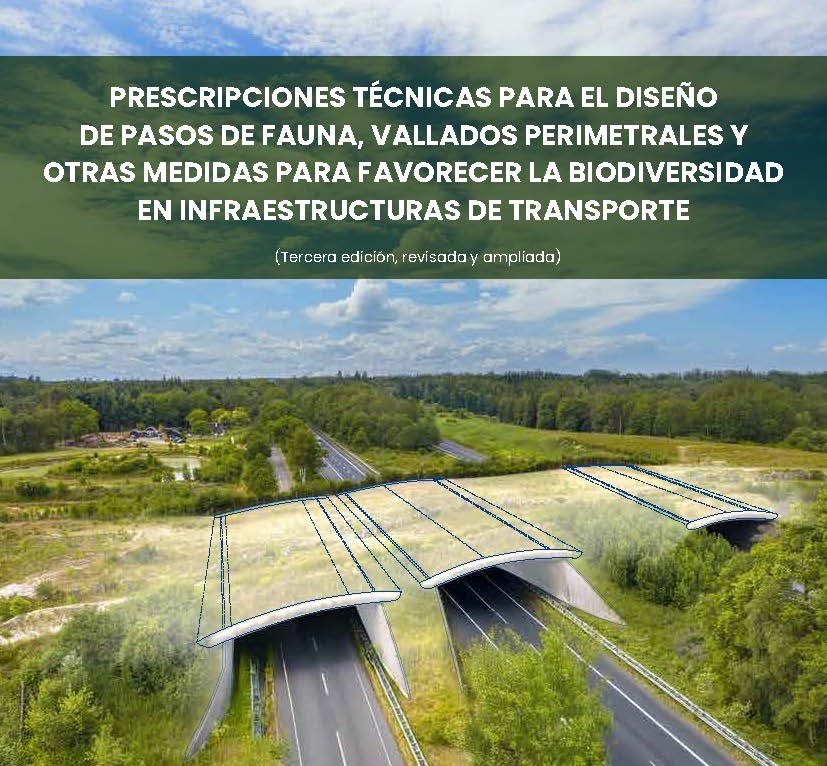
The third edition of the guide Prescripciones técnicas para el diseño de pasos de fauna, vallados perimetrales y otras medidas para favorecer la biodiversidad en infraestructuras de transporte is now available. This document serves as a reference guide for integrating biodiversity into the design, construction and management of transport infrastructure.
This publication has been produced within the framework of the Working Group on Habitat Fragmentation caused by Transport Infrastructure, set up by the Ministry for Ecological Transition and the Demographic Challenge (MITECO), with the participation of professionals specialising in biodiversity conservation, transport infrastructure and environmental impact assessment.
This new edition updates and expands the content of previous editions, incorporating the scientific and technical advances of recent years. The main new features include:
☑️ The 1st edition, published in 2006, was based on the guidelines set out in the European handbook «Fauna y Tráfico». This new edition incorporates the recommendations from the online handbook «IENE Infrastructure and Biodiversity: A Handbook for Action», as well as a review of the scientific literature and contributions from infrastructure and biodiversity managers.
☑️ It includes new content on habitat defragmentation, which will contribute to ecological restoration, with a new fact sheet dedicated to «Adapting structures to facilitate wildlife passage through operational infrastructure».
☑️ The factsheets describing the 11 types of wildlife crossings have been updated, as have the guidelines relating to perimeter fencing.
☑️ It incorporates factsheets on new technologies to reduce wildlife collisions and accidents.
☑️ It adds 3new factsheets on the management of habitats associated with infrastructure to promote biodiversity.
The MINUARTIA team has contributed to this update by providing technical assistance, as part of a collaboration with the authorities and the various stakeholders involved that has been ongoing for more than two decades. During this period, numerous initiatives have been launched which have helped to reduce habitat fragmentation, minimise wildlife roadkill and improve ecological connectivity.
The new edition builds on existing knowledge to continue moving towards safer infrastructure that contributes to the conservation of biodiversity and is aligned with ecological restoration objectives.
You can download the guide here: Technical specifications
