
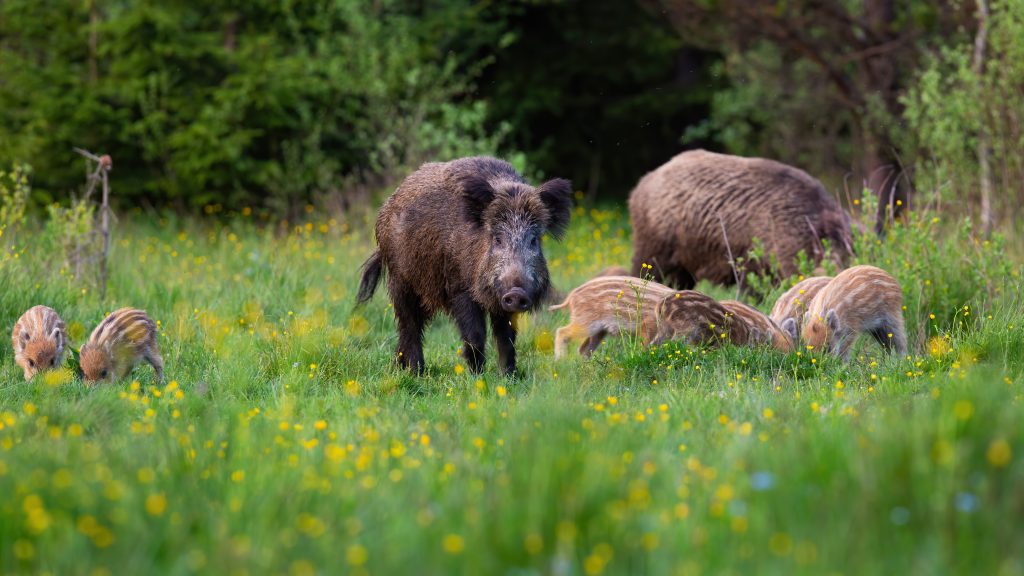
The article ’What drives wild boar density and population growth in Mediterranean environments?’ published in the scientific journal Science of Total Environment, is based on data collected over 23 years in the observatories of the Wild Boar Monitoring Program in Catalonia, promoted by the Generalitat of Catalonia and the Diputació de Barcelona. The application of models based on data obtained in 14 study areas has allowed the identification of the factors that affect the density and growth rate of the populations of this species, which in recent decades has shown great expansion and causes notable conflicts.
The article, led by Joana Colomer and also co-authored by Carme Rosell from MINUARTIA, was carried out in collaboration with researchers from the University of Barcelona – IRBIO, York University, Animal and Plant Health Agency, Botstiber Institute and Aberdeen University.
The models used explained, respectively, 94% and 65% of the variability in density and growth rate. Spring precipitation, the weight of females, and the forest cover of the study areas are directly associated with higher wild boar densities and population growth rates. The interaction between crop cover and total annual precipitation also plays an important role in determining population density.
The results suggest that the decrease in precipitation associated with global warming could limit the availability of food in the natural environment and slow the growth of wild boar populations in Mediterranean environments. However, wild boars can use alternative sources of anthropogenic food, in croplands and urban areas, making it likely that conflicts with humans will increase.
