
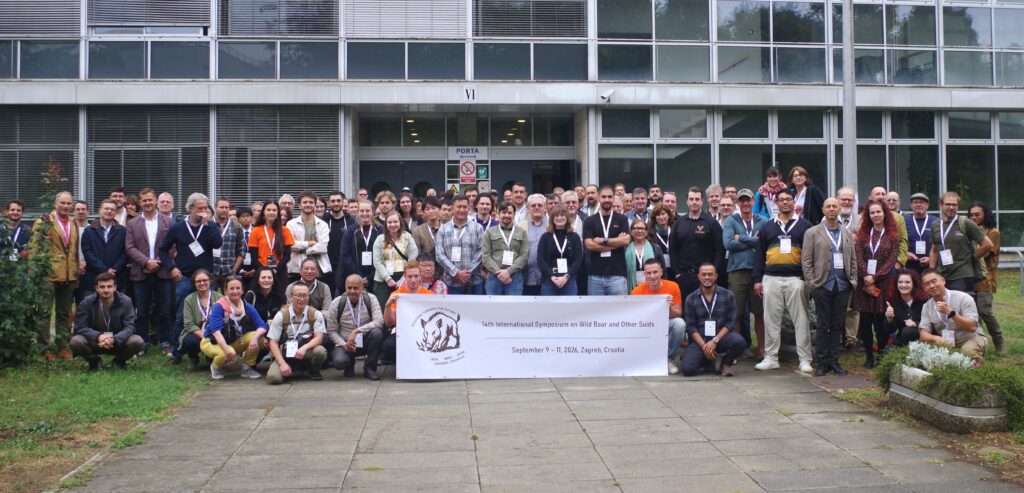
The 14th International Wild Boar and Other Suids Symposium brought together wild boar management experts from around the world in Croatia. Organized by the Faculty of Agriculture of the University of Zagreb under the theme Rooting towards the Future, the symposium featured presentations on wild boar ecology and new techniques for their study and management.
As in previous editions, the MINUARTIA team participated in the symposium and presented contributions on ecological modelling, African Swine Fever management, wild boar census techniques, and the species’ impact on protected natural areas. These presentations were delivered in collaboration with the Generalitat de Catalunya (CAR, DAR and DTES), the Diputació de Barcelona (Xarxa de Parcs Naturals), the University of Barcelona, and partners of the WildASFVax research project. Highlights included:
- A plenary lecture delivered by postdoctoral researcher Kevin Morelle, who is currently developing a project at MINUARTIA on wild boar movement modelling. In his presentation entitled 25 years of wild boar tracking, 10 years of Euroboar, he reviewed the evolution of research on wild boar movement ecology and highlighted the importance of the Euroboar network in fostering collaboration among researchers.
- The workshop Do’s and don’ts in ASF management following primary incursions, which brought together experts involved in the management of African Swine Fever (ASF) outbreaks in wild boar populations across Europe. Participants shared recommendations for outbreak control and eradication, highlighting the main factors associated with success and failure. The workshop included an analysis of the ongoing outbreak in Barcelona, as well as presentations of the cases of Belgium and Sweden, where eradication was successfully achieved, and Germany and Italy, among others, where this goal has not yet been reached. The workshop emphasized the importance of implementing a strategy combining fencing and population removal measures to reduce the risk of virus transmission, together with the removal of infected carcasses and restrictions on hunting and human activities within affected areas. These measures help reduce wild boar dispersal and the risk of disease spread to new areas. Governance, cooperation and communication among the many stakeholders involved were identified as key factors for successful outbreak control.
MINUARTIA carries out wild boar monitoring projects that include population surveys based on both hunting data and camera-trapping techniques, particularly in protected natural areas where hunting is not permitted. The team also conducts GPS tagging and tracking programmes, as well as movement and activity pattern modelling. In addition, MINUARTIA has developed extensive expertise in the design and implementation of damage prevention and mitigation measures.
